

Our Quick Guide to Pendulums: How can it work for me?
Posted by Cathryn Blair, Lesley Blair on 29th Nov 2022
Pendulum Guide
Updated: May 2026
Have you ever stood in front of your crystal collection, feeling a gentle tug toward one stone in particular – only to wonder, “Why this one today?”
That quiet nudge is your intuition speaking. And a pendulum is one of the simplest, most beautiful tools you can use to turn that inner voice into a clear, visible conversation.
Whether you’re completely new to dowsing or you’ve had a pendulum sitting on your altar for months without really knowing how to use it, this guide will walk you through everything you need to know – from choosing your first pendulum to asking it meaningful questions with confidence.

What Exactly Is a Pendulum?
At its heart, a pendulum is a weighted object suspended from a chain or cord. It can be any weight, and it can be any sort of string, cord or chain. Pendulums also come in different materials, shapes and sizes. Usually they are small enough to fit in the palm of the hand, and the chain or string is usually around 20-25cm long (anywhere from 8-10 inches).
When held steadily, it swings in response to tiny, unconscious muscle movements called ideomotor responses. These movements are guided by your subconscious mind and your higher self – connecting you to knowledge that lies beneath your everyday thoughts.
For crystal lovers, pendulums are often made from stones like clear quartz, amethyst, rose quartz, or labradorite. But they can also be carved from wood, shaped from metal, or even made from brass. What matters most isn’t the material – it’s the connection you feel when you hold it.

Why Use a Pendulum?
People turn to pendulums for many reasons. Here are just a few:
-
Getting clarity when you feel stuck between two decisions.
-
Checking the energy of your crystals – is that new crystal truly aligned with you?
-
Communicating with your intuition without second‑guessing every thought.
-
Balancing your chakras by dowsing over each energy centre.
-
Finding lost objects (yes, it really works for some people!).
-
Clearing a room’s energy by asking the pendulum where stagnant energy lingers.
A pendulum doesn’t give you “magic” answers. Instead, it acts like a mirror for your subconscious – reflecting what you already know deep down, but may have trouble admitting to yourself.
Choosing Your First Pendulum
If you don’t already own a pendulum, choosing one is a lovely, intuitive process. Here’s how to approach it:
1. Follow your first instinct
When you look at a pendulum, which one makes you want to pick it up? Don’t overthink it. Your intuition will often point you toward the right weight, colour, and material for you.
2. Consider the weight
A pendulum that’s too heavy can feel sluggish; one that’s too light may feel erratic. Most crystal pendulums are pleasantly substantial without being tiring to hold for a few minutes.
3. Check the chain length
A comfortable length is roughly 15–25cm (6–10 inches). Too short, and you’ll crowd your hand; too long, and the swings become harder to read.
4. Popular materials for pendulums
Material |
Best for |
|---|---|
| Amazonite | Calming communication, soothing anxiety, speaking your truth with kindness. |
| Amethyst | Spiritual insight, calming overthinking. |
| Chevron Amethyst | Balancing the third eye and crown chakras, grounding spiritual insights into daily action, overcoming mental blocks (the white quartz bands add clarity to amethyst’s intuition). |
| Angelite | Gentle angelic connection, inner peace, easing grief or worry. |
| Jadeite | Abundance, luck, emotional balance – especially useful for prosperity questions. |
| Nephrite Jade | Grounded wisdom, longevity, harmony with nature – softer energy than Jadeite, ideal for ancestral questions. |
| Labradorite | Intuition, psychic development, protection. |
| Lepidolite | Anxiety relief, emotional stability, transitioning through difficult changes (high lithium content). |
| Black Obsidian | Shadow work, cutting through illusions. |
| Clear Quartz | General use, clarity, amplifying other energies. |
| Rose Quartz | Heart‑centred questions, relationships, self‑love. |
| Ruby in Fuchsite | Energising the heart, manifesting passion, gentle but motivating action (great for creative blocks). |
| Scolecite | Deep peace, dream recall, connecting to higher guidance (very gentle energy). |
| Selenite | Clarity of intention, connecting to higher self, cleansing other pendulums (never needs recharging itself) |
| Shungite | EMF protection, energetic detox, grounding in chaotic environments – excellent for technology‑related questions. |
| Sodalite | Logic and intuition working together, calming a busy mind, group harmony. |
| Black Tourmaline | Protection, grounding, clearing dense energy from spaces or people. |
| Brass | Precision, traditional dowsing, connecting to earth energies (non‑crystalline, very steady). |
| Metal | Neutral, durable, excellent for dowsing without crystal influence – good for sceptics or practical use. |
| Wood | Earthy, warm, gentle energy – ideal for nature‑connected work and those sensitive to crystal vibrations. |
At Lesca Crystals, we hand‑select each pendulum for energetic alignment – so whichever one calls to you, you can trust it’s ready to work with you.
Certain materials and crystals may appeal to you, what is most important when selecting a pendulum is that you should be drawn to it. If buying it in person, we recommend that you pick it up and try it out.
How to Cleanse and Care for Your Pendulum
Before you use a new pendulum (and periodically afterward), it’s important to clear any lingering energies it may have picked up.
Gentle cleansing methods:
-
Moonlight – Leave it on a windowsill overnight during a full moon.
-
Sound – Ring a singing bowl or chime near it for a minute.
-
Smoke – Pass it through sage, palo santo, or incense smoke.
-
Breath – Hold it in your hands and gently blow on it with the intention of clearing old energy.
-
Selenite – Place your pendulum on a selenite charging plate for a few hours (selenite never needs cleansing itself – it simply shares its pure frequency).
What to avoid:
-
Most crystal pendulums should not be soaked in water – especially if they incorporate metal or are made from soft stones like selenite or angelite.
-
Avoid dropping your pendulum – the tip can chip, and the energy flow can be disrupted.
How to Use a Pendulum: A Step‑by‑Step Guide
REMEMBER: Your pendulum may not swing the same way as another person's!
Step 1 – Find a calm space
Sit comfortably with both feet flat on the floor. Take three slow, grounding breaths.
Step 2 – Hold it correctly
Pinch the top of the chain lightly between your thumb and forefinger. Let the pendulum hang freely – your elbow should be relaxed, not locked.
Step 3 – Still the pendulum
Use your other hand to gently stop any movement. Wait until it hangs completely still.
Step 4 – Calibrate your pendulum (the most important step!)
You need to establish what yes, no, and maybe look like for you. There’s no universal direction – it’s personal.
Say aloud: “Show me a YES.”
Wait 10–20 seconds. Notice the movement. It might be:
-
Back and forth
-
Side to side
-
Clockwise circle
-
Counter‑clockwise circle
Then say: “Show me a NO.”
Again, wait and observe. Finally: “Show me a MAYBE / I’M NOT SURE.”
Write these movements down until they become familiar.
Tip: Your pendulum’s responses can change over time or with your mood. It’s a good habit to recalibrate at the start of each session.
Step 5 – Ask clear, answerable questions
A pendulum works best with yes/no questions. Avoid vague or future‑based questions.
Good examples:
-
“Is this crystal energetically beneficial for me right now?”
-
“Have I cleansed this space recently?”
-
“Would a few minutes of meditation serve me today?”
Questions to avoid:
-
“Will I win the lottery next week?” (the pendulum reflects your hopes, not fortune‑telling)
-
“Should I break up with my partner?” (use a pendulum for guidance, not major life decisions – always combine with your own wisdom)
Step 6 – Trust the first movement
The first swing is usually the clearest. If you keep asking the same question hoping for a different answer, pause and come back later.
Advanced Ways to Use Your Pendulum
Once you’re comfortable with basic yes/no dowsing, you can explore deeper practices.
1. Chakra checking
Lie down or sit still. Hold your pendulum over each chakra point (root, sacral, solar plexus, heart, throat, third eye, crown).
-
A wide, balanced circle often means the chakra is flowing well.
-
A small, tight, or erratic swing may indicate a blockage.
2. Finding lost objects
Walk slowly around your home with the pendulum. Ask: “Am I getting warmer?” Let the pendulum guide you – a strong yes swing means you’re moving in the right direction.
3. Clearing a room’s energy
Hold the pendulum at waist height and walk the perimeter of a room. Wherever the pendulum swings wildly or stops, pause and visualise white light clearing that spot.
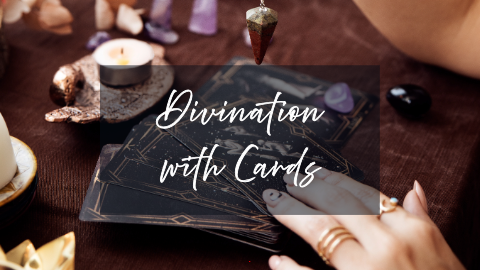
4. Divination with cards (tarot & oracle)
Your pendulum can be a powerful companion to card readings. It helps clarify uncertainty, confirm interpretations, or guide you toward the right card when you feel stuck.
How to try it:
-
Shuffle your deck with a clear question in mind.
-
Spread the cards face down (or fan them out).
-
Hold your pendulum over each card (or hover it a few centimetres above).
-
Ask a simple yes/no question for each card, such as:
-
“Is this card relevant to my question?”
-
“Does this card carry the core message I need?”
-
-
Trust the pendulum’s response. A strong “yes” swing suggests that card holds the answer you’re looking for.
Alternatively, after you’ve drawn a card:
Place the card on a table, hold your pendulum over the centre, and ask clarifying questions like:
-
“Does this card represent my current energy?”
-
“Is the challenge shown here external or internal?”
-
“What’s the best next step?” (use yes/no calibration – e.g. “Is the next step to wait?”)
Tip: Use this method when a card’s meaning feels vague or multiple interpretations are possible. The pendulum doesn’t replace your intuition – it helps you trust it.
Common Mistakes (And How to Fix Them)
| Mistake | Solution |
|---|---|
| Holding the chain too tightly | Loosen your grip – treat the pendulum like a delicate friend. |
| Moving your hand unconsciously | Rest your elbow on a table or your knee to reduce motion. |
| Asking the same question repeatedly | Trust the first answer. Ask once, then thank your pendulum. |
| Feeling doubtful or cynical | That’s okay! Just say, “I’m open to receiving guidance.” |
| No movement at all | Relax. Take a break. Try again later – some people need practice. |
How to Know If It’s “Really Working”
Many beginners worry: “Am I moving this myself without realising?”
The honest answer is: yes, your body is moving it. But that’s the whole point. The pendulum translates your subconscious, intuitive, or spiritual knowing into visible motion. Over time, you’ll learn to distinguish between:
-
Ego movement (what you want to happen)
-
Intuitive movement (what you sense to be true)
The best way to build trust is to test your pendulum with questions you already know the answer to. For example: “Is my name [your name]?” Then: “Is my name Bob?” Compare the responses. This builds confidence in your unique calibration.
A Simple Pendulum Ritual to Start Your Journey
Before your first real session, try this mini‑ritual:
-
Light a candle or sit near a window.
-
Hold your pendulum over your heart for a few breaths.
-
Say silently or aloud: “I ask only for my highest good and the good of all.”
-
Calibrate for yes/no/maybe.
-
Ask one gentle question – something like: “Is there anything I need to pay attention to today?”
-
Thank your pendulum and place it somewhere safe (in a cloth pouch or on a selenite plate is perfect).
Final Thoughts
A pendulum is not a magic wand – it’s a conversation starter with your own deepest knowing. Some days the answers will feel crystal clear. Other days, you might get stillness or confusion. That’s all part of the practice.
Be patient with yourself. Your pendulum is a patient teacher.
And if you’re ever unsure where to begin, just hold it, breathe, and ask: “Show me what I need to know today.”
Ready to find your perfect pendulum?
Explore our hand‑selected collection of crystal pendulums at Lesca Crystals – each one cleansed, charged, and ready to work with you.
Have you used a pendulum before? We’d love to hear your experiences in the comments below.
- x Cathryn with input from Lesley & Deb) x -