
More Than Just a Stone: How Crystal Touch Stones Can Support Neurodivergent Minds
Posted by Cathryn Blair, Lesley Blair on 7th Sep 2026
Companion crystals for sensory regulation
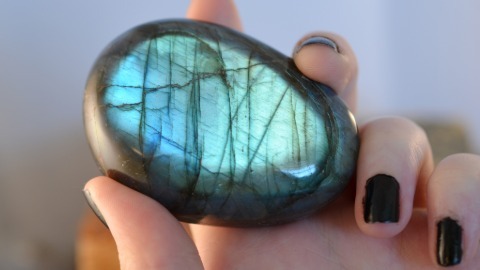
If you've ever closed your fingers around a smooth, cool crystal and felt your shoulders drop an inch, you already know the magic of palm stones (also called touch, worry or thumb stones). But for neurodivergent individuals—those with ADHD, autism, dyslexia, and other cognitive differences—these beautifully shaped crystals can offer something even deeper: a gentle, tangible tool for sensory regulation, grounding, and calm.
Following on from our popular guide to wearing crystal jewellery on the left vs right hand, we're exploring how palm stones can be powerful allies for neurodivergent needs—not as a cure or treatment, but as sensory supports that can make a meaningful difference in daily life.
| If you're curious to explore which palm stones are currently available, you can browse our full Palm Stones Collection here. |
What Does It Mean to Be Neurodivergent?
The term neurodivergent describes a person whose brain processes, learns, senses, or communicates in ways that differ from what is considered typical. Around 15% of the global population is neurodivergent, and this includes conditions such as:
- Autism Spectrum Disorder (ASD)
- Attention Deficit Hyperactivity Disorder (ADHD)
- Dyslexia, Dyscalculia, and Dysgraphia
- Dyspraxia (Developmental Coordination Disorder)
Many neurodivergent people experience sensory processing differences—meaning they may be hyper-sensitive or hypo-sensitive to textures, sounds, lights, and touch. This is where palm stones can step in as quiet, portable companions.
Why Palm Stones Work for Neurodivergent Needs
Crystals aren't scientifically proven treatments, and they don't replace medical advice or therapeutic support. But for many neurodivergent people, their value comes from something much simpler: texture, weight, visual calm, and the comfort of routine.
Here's why palm stones, in particular, can be so effective:
- Sensory Input That Soothes – Smooth, polished surfaces provide predictable tactile stimulation that can be deeply calming. For those who are sensory-seeking, rubbing a thumb across a palm stone's surface offers a discreet way to self-regulate.
- Grounding in the Present Moment – Holding a palm stone can help bring attention back to the body, interrupting anxious thought spirals and reducing overwhelm.
- A Discreet Stim Object – Touch, Worry and Palm Stones can be used as portable, unobtrusive stim tools that provide comfort without drawing attention.
- Routine and Predictability – Using a palm stone at the same time each day—during morning meditation, before bed, or during moments of stress—builds a sense of stability that many neurodivergent people find reassuring.
The Science Behind the Touch
The benefits aren't just anecdotal. Research shows that tactile stimulation—like rubbing a smooth stone—can trigger the release of endorphins, the body's natural feel-good chemicals. For autistic individuals, who commonly seek out tactile experiences, having a smooth, cool stone to hold can provide a sense of boundary and containment during moments of sensory overload.
Customer Testimonials:
"I started carrying a smooth palm stone in my pocket, and just having something solid and cool to hold onto helped ground me in overwhelming moments."
"When under pressure, I reach for my stone for some instant calm (and emotional relief)."
Choosing the Right Palm Stone for Neurodivergent Support
Different crystals offer different sensory experiences and energetic qualities. Here are some that are particularly well-suited for neurodivergent needs:
Feeling drawn to any of these stones? Explore our Palm Stones Collection and let your intuition guide you—each stone is hand‑selected for its quality and energy.
How to Use Palm Stones for Neurodivergent Support
The beauty of palm stones lies in their simplicity. Here are some practical ways to incorporate them:
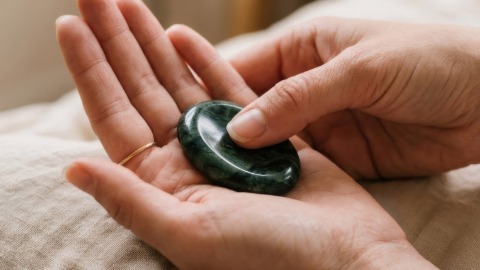
- For Sensory Overload – Keep a smooth palm stone in your pocket, bag, or desk drawer. When the world feels too loud or bright, hold it and focus on its texture, weight, and temperature.
- For Focus and Concentration – Hold a palm stone in your non-dominant hand while working or studying. The gentle sensory input can help channel restless energy and improve focus.
- For Emotional Regulation – Use a palm stone as a physical anchor during moments of intense emotion. Focus on the stone's surface and take slow, deep breaths. It also works for public speaking and presentation situations.
- For Sleep – Place calming stones like Lepidolite or Amethyst under your pillow or on your bedside table to promote restful sleep.
- As a Daily (or Bedtime) Ritual – Incorporate a palm stone into your morning/evening routine. Hold it while setting an intention for the day/night, or simply take a few moments to breathe and ground yourself.
Tip: Individual Needs Differ
Neurodivergence is not one-size-fits-all. Some people may find crystals helpful, others may feel neutral, and some may prefer other tools entirely. All responses are valid. Crystals should always be:
- Optional – never pressured.
- One tool among many – not a replacement for professional support.
- Chosen by the individual – personal preference matters more than any assigned meaning.
Caring for Your Palm Stone
To maintain their energy and beauty, palm stones need gentle care:
- Cleaning: Wipe with a soft, slightly damp cloth—never soak in water (especially Labradorite).
- Drying: Dry with a clean, soft fabric.
- Storage: Store in a safe container or soft pouch to prevent scratches.
- Cleansing and charging: Try moonlight, sage smoke, or placing them on a Selenite charging plate.
Tactile Relief
Crystal palm stones are versatile, soothing, and deeply personal tools. For neurodivergent individuals, they offer something precious: a simple, tactile way to navigate a world that can often feel overwhelming.
Whether you choose Black Tourmaline for grounding, Lepidolite for calm, or Rose Quartz for self-compassion, the right palm stone can become a quiet companion—smooth, grounding, and always there when you need a moment of peace.
Ready to find the stone that fits perfectly in your hand—and your life? Explore our Palm Stones Collection and let your intuition guide you. Remember, the one that "feels right" usually is!
~ x Cathryn (and Lesley) X~
Do you have a favourite palm stone? We'd love to hear how you use yours—especially if it's part of your neurodivergent toolkit. Let us know in the comments below!